Team MemberSpace
If you have a private Facebook group you want to charge for access, or an idea for a group you’d like to monetize, there’s no built-in way to accept payments.
So, how do you start charging members to join? The easiest way to create paid Facebook Groups is to sell access through your website and use a membership platform like MemberSpace to process payments.
There are tons of benefits to this approach:
- You have total control over your pricing and membership offerings, so you can offer your community additional perks like workshops, a content library, or an online course
- Requiring payment to join ensures that your members are genuinely interested in your group (AKA no spammy signups!)
- By only providing the group link to paying members, your community will be more secure and easier to moderate
- Many potential members already use Facebook, making it easier for them to engage with your content.
In this post, we'll cover:
Create your paid Facebook Group!
The easiest way to accept membership payments or one-time charges for digital products like online courses, communities, content libraries, and more — all from your own website!
Get started for free! 5 minutes to set up.
Step 1: Set up a private Facebook Group
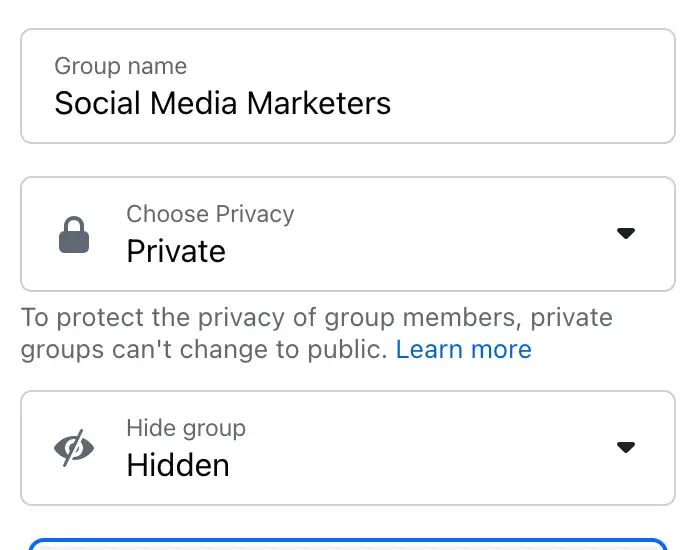
If you don’t have your group set up already, you’ll need to create one and set it to “hidden” so people cannot find the community unless they have then link. Then, turn on membership approval so you can moderate who is able to join.
Step 2: Install MemberSpace on your website
To ensure only paying community members can access your Facebook Group, you’ll need sign up for MemberSpace for free and connect it to your website (it works with any CMS and takes just a few minutes to install!).
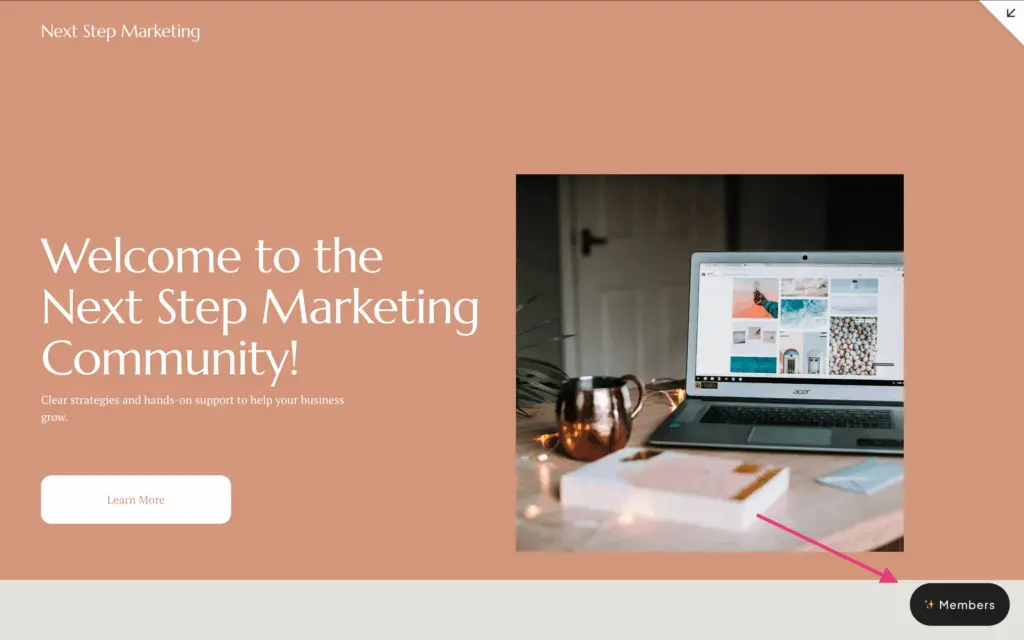
Once it’s installed, you’ll see a Member button the bottom right corner of your website. This is where your community members will be able to login/signup to access your paid Facebook Group.
✨ Don’t have a website? You can still use MemberSpace to create your paid Facebook Group! When you sign up, simply indiciate that you don’t have a website and we’ll set up a free, one-page site for you with our partners at Pop Site.
Step 3: Add your Facebook Group link to MemberSpace
In this step, you’ll use MemberSpace to create a signup/login area on your website so paying members can access your group.
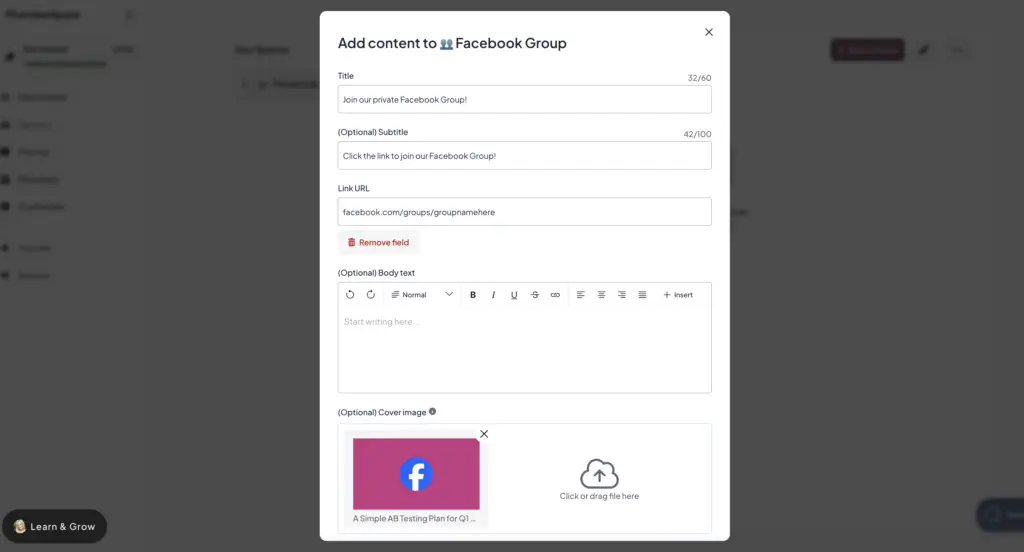
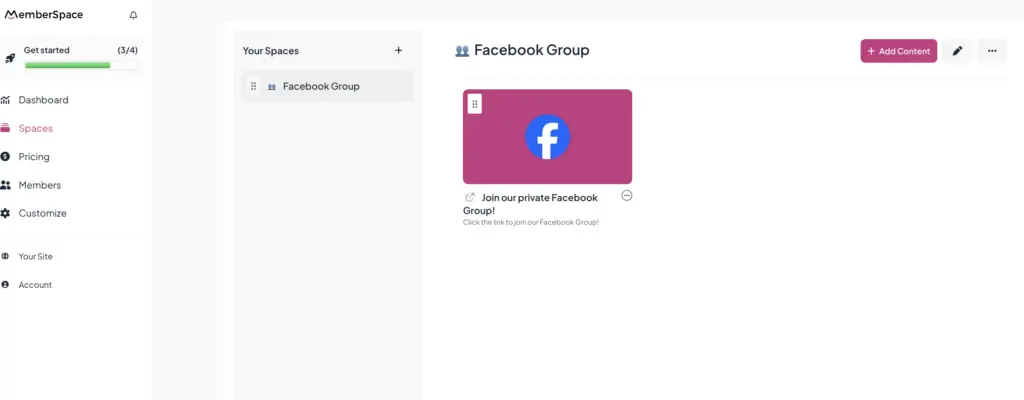
First, create a new Space and click Add Content. You’ll need to choose the link option and add the URL for your Facebook group. This will require members to sign up and pay for your community before they get access to the group link.
Step 4: Set a price for your paid group
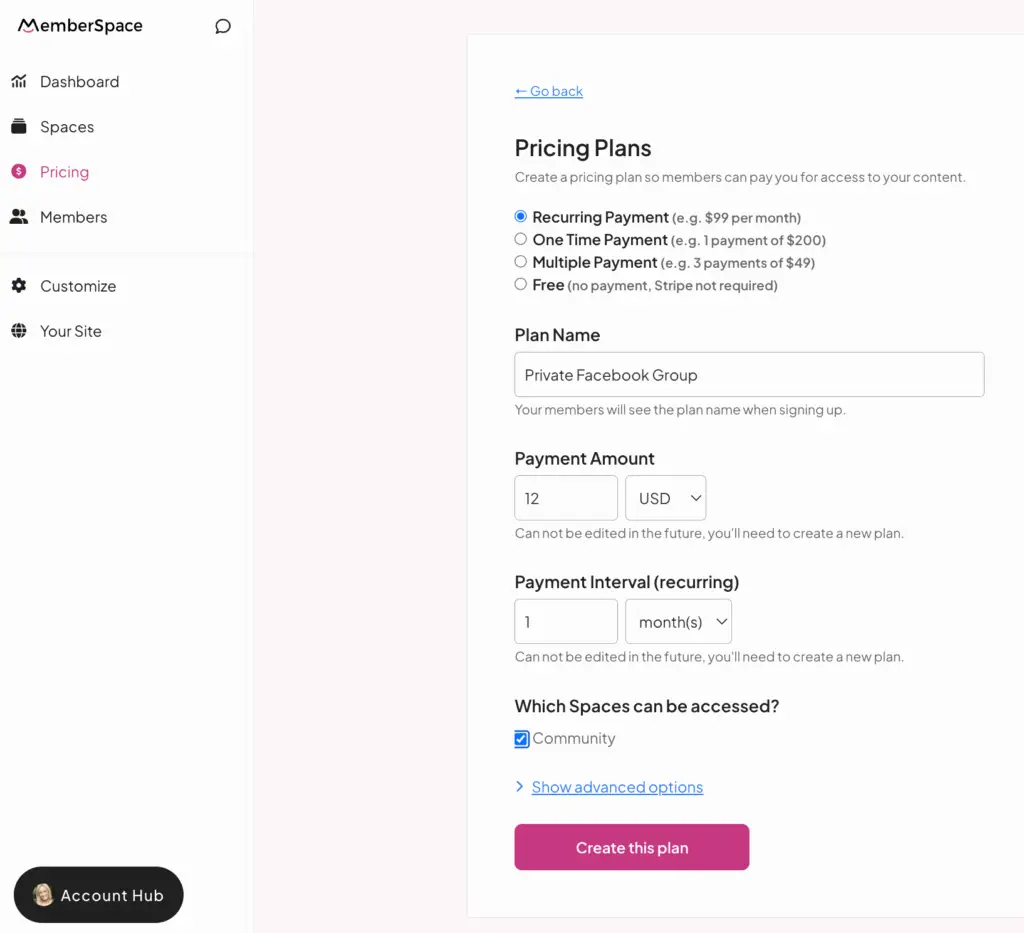
MemberSpace integrates directly with Stripe, so it’s easy to accept payments securely on your website. Recurring payment is the most common option for online communities, but you can also choose from multiple payment, one-time payment, and free.
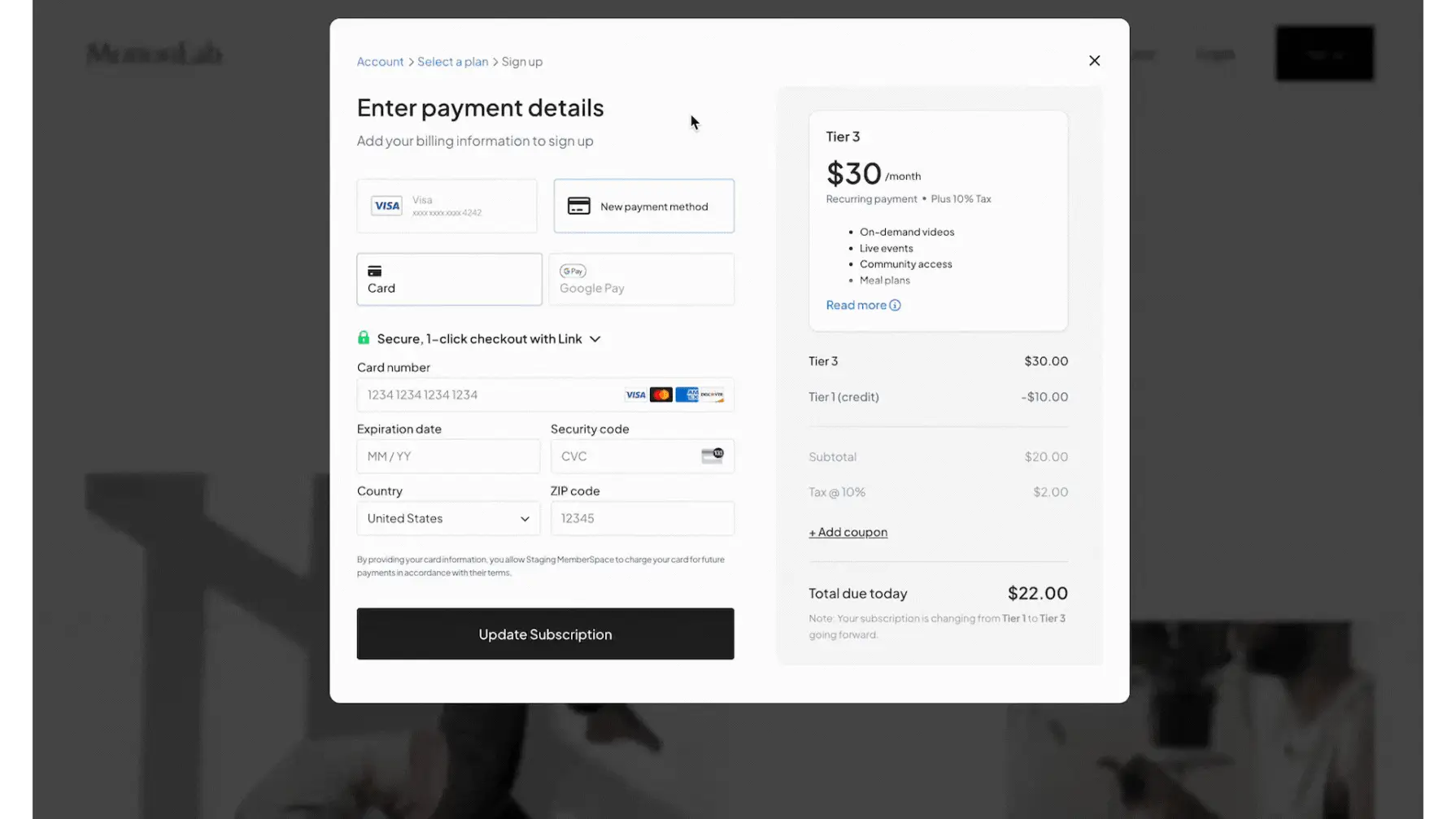
When someone goes to signup for access to your group, they’ll be prompted to pay via credit card, Apple Pay, or Google Pay.
Pricing Your Paid Facebook Group
Most paid Facebook Groups use recurring monthly or yearly subscriptions, especially if you’re consistently offering new content, support, coaching, or resources.
You can also experiment with:
- one-time payments for short-term groups or challenges
- free trials
- multiple membership tiers
- discounted annual plans
Here’s a general idea of how many business owners price their communities:
| Community Type | Typical Pricing |
|---|---|
| Accountability groups | $10–$50/month |
| Resource memberships | $20–$100/month |
| Coaching communities | $50–$300+/month |
| Premium masterminds | $100–$1000+/month |
In most cases, pricing depends less on “access to a Facebook Group” and more on the overall value members receive.
For example:
- accountability and support can justify recurring pricing
- workshops, coaching, and live calls increase perceived value
- templates, resources, and trainings help members feel like they’re getting ongoing benefits beyond community access alone
With MemberSpace, you can also create multiple pricing tiers, offer free trials, add discount codes, and bundle your Facebook Group with things like courses, content libraries, coaching, or downloadable resources.
Step 5: Add your signup link to your website
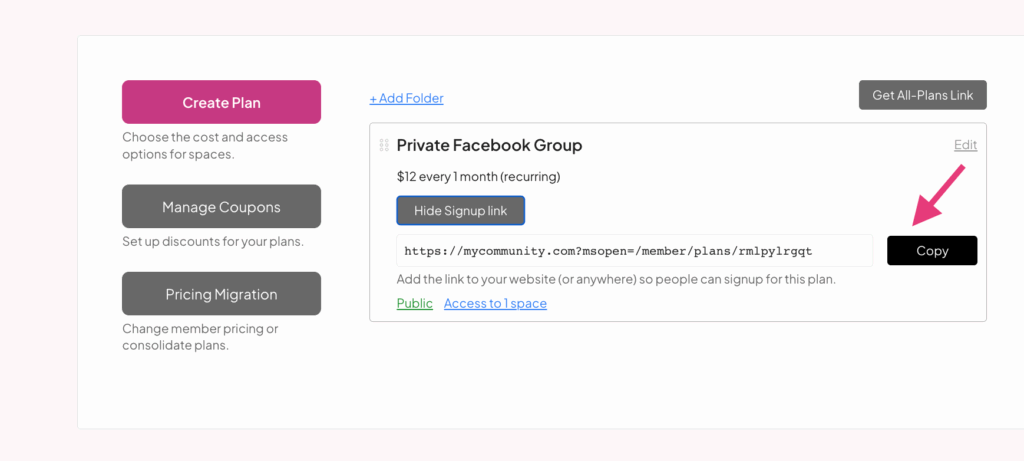
Once you’ve created pricing your pricing plan, grab the Signup link from your plan and add it anywhere you’d like people to be able to join your paid group – CTA buttons on your website, in your social media bios, in email campaigns, etc. When someone clicks the link, they will sign up and pay for access to your group and then get access to the group URL.
There are a few other ways to share your group with new members, as well:
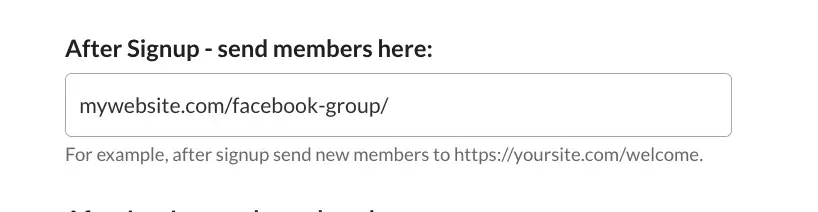
- Option 1: Automatically redirect them to a members-only page that contains a link to the group, or redirect them directly to your Facebook Group. You can do this when you set a price for community access. Members will then request access and you’ll approve them (knowing the requests are only coming from those who paid and received the link via your signup process).
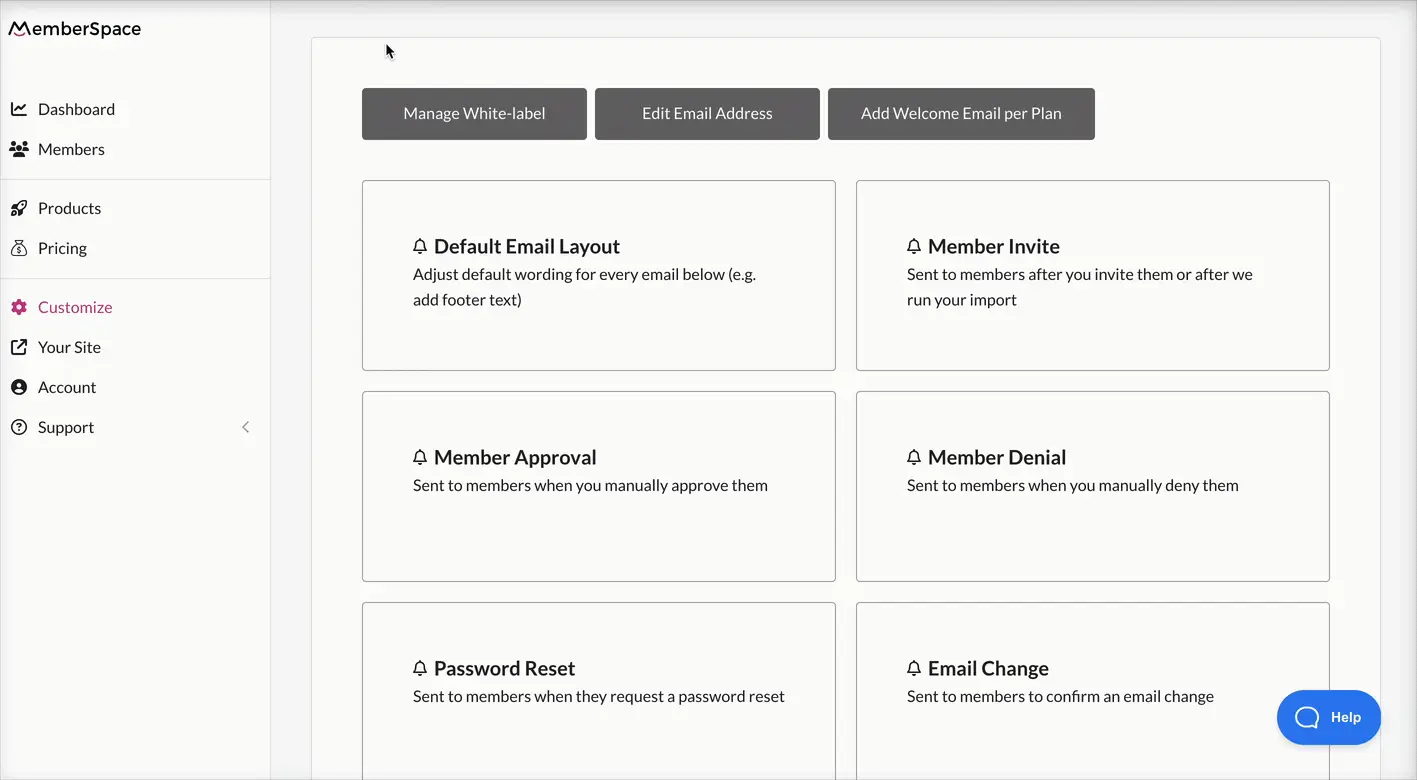
- Option 2: Send out a welcome email to new community members with a link to the group. This can be automated with MemberSpace to send after someone signs up on your website. Like option one, members will request access and you’ll approve them.
- Option 3: Add members on Facebook after they sign up through your website.
What Makes People Pay for a Facebook Group?
The most successful paid Facebook Groups usually offer a lot more than just access to a private community.
In most cases, the Facebook Group acts as the central place members stay connected between everything else a business offers — whether that’s coaching, workshops, courses, accountability, templates, live trainings, or networking opportunities.
For example, many membership businesses use their Facebook Groups to:
- answer member questions
- host discussions and accountability threads
- share updates and announcements
- run live Q&As or trainings
- encourage networking between members
- celebrate wins and progress
- keep members engaged between content releases or coaching calls
That ongoing interaction is usually what makes the membership feel more valuable and personal over time.
People aren’t just paying for “a Facebook Group,” they’re paying for support, accountability, education, resources, and connection with people working toward similar goals.
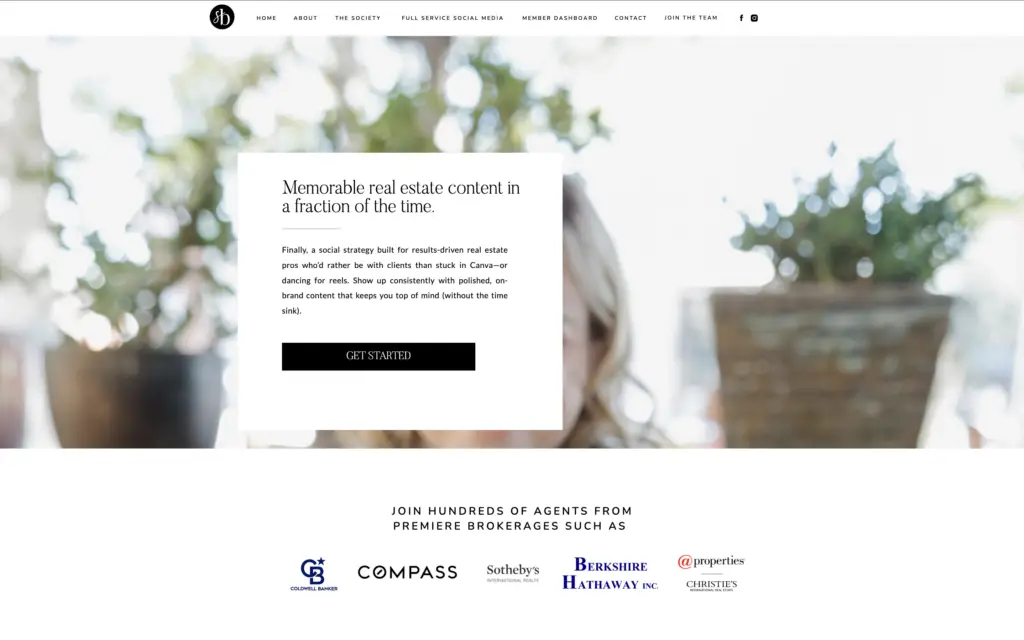
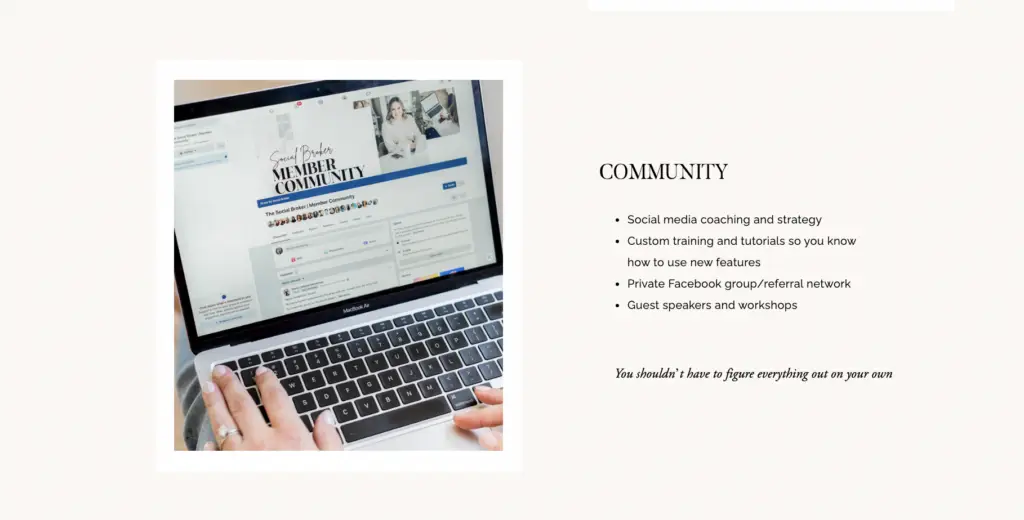
One business that does this really well is MemberSpace customer, The Social Broker.
Paid Facebook Group Example – The Social Broker
The Social Broker is a great example of how a paid Facebook Group can support a larger membership business instead of acting as the entire product on its own.
Created for real estate agents who want help showing up more consistently online, the Social Broker Society combines:
- editable Canva templates
- content calendars
- caption packs
- reel prompts
- stock photo libraries
- live strategy calls
- trainings
- and marketing resources
alongside a private member community.
Inside the Facebook Group, members can ask questions, get feedback, share wins, network with other agents, and stay accountable between content releases and coaching calls.
What makes this model work especially well is that the community supports the rest of the membership experience. Instead of members simply downloading templates and leaving, the Facebook Group helps keep people engaged, learning, and consistently implementing what they’re getting access to each month.
It’s a great example of how paid Facebook Groups often work best when paired with ongoing resources, education, accountability, and community support, not just access to a group alone.
Ways to Monetize a Facebook Group
As we just talked about, one of the most common ways to monetize a Facebook Group is by charging directly for access to a private community as part of a larger membership experience.
But another really effective strategy is keeping your Facebook Group free and using it to naturally funnel members toward your paid offerings over time.
For example, many business owners use free Facebook Groups to:
- share valuable free content
- build trust with their audience
- grow community engagement
- showcase their expertise
- and introduce members to things like memberships, digital products, coaching, courses, templates, or resource libraries that live on their website
This works especially well when your free group consistently delivers value while your paid offer provides deeper support, premium resources, or a more structured experience.
A great example of this is Ladies of Real Estate, which used a free Facebook Group and free marketing resources to grow a highly engaged community before launching a paid membership experience.
Example: How Linda Monetized a Free Facebook Group
Let’s talk about someone who’s actually done this successfully. Linda started Ladies of Real Estate because she saw a gap in the industry — while 65% of real estate agents were women, most resources were geared toward men. So, she created a Facebook group just for female agents to connect, learn, and get marketing support.
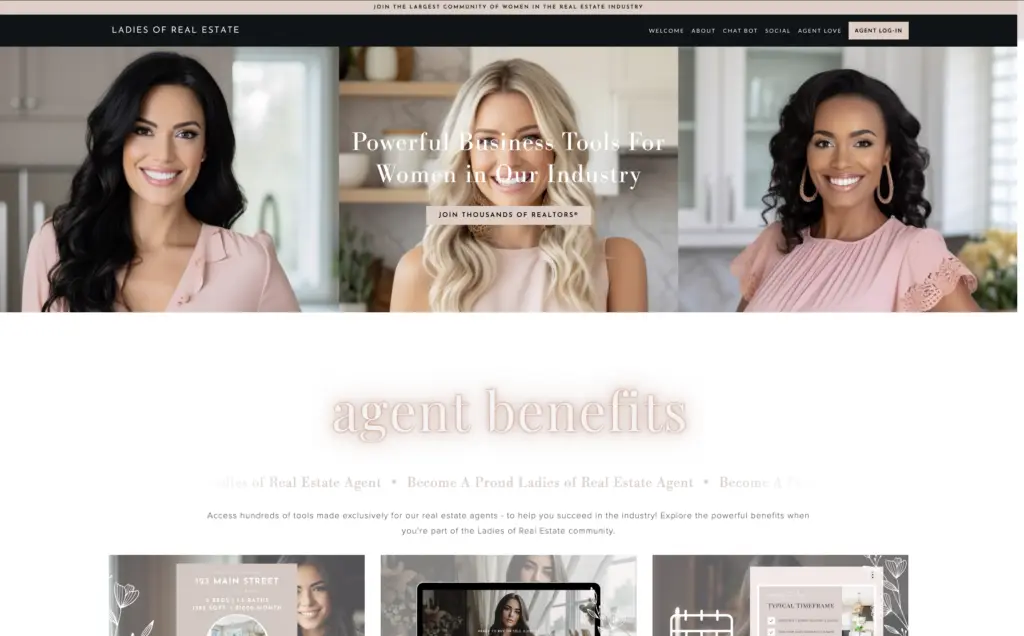
But she didn’t just sit back and wait for people to join — she made things happen. Here’s what she did:
- She offered a free Facebook cover design to members who invited 50 friends. This one really paid off. Some people ended up inviting way more than 50!
- She consistently posted valuable, free social media graphics to keep engagement high.
- She used the free group as a funnel to promote her paid membership, which provided even more exclusive content.
And the result? Within a week of launching her paid membership, she had hundreds of paying members. Today, her group is the largest community of women in the real estate industry and continues to grow, proving that a well-structured Facebook group can turn into a serious business.
Tips for Running a Successful Paid Facebook Group
Creating a paid Facebook Group is one thing, but keeping members engaged long-term is what actually makes the business sustainable.
One of the biggest mistakes people make is launching a paid community without having a real plan for engagement and ongoing content. If the group feels inactive or inconsistent, members are much more likely to lose interest and cancel.
The most successful paid communities usually have a consistent rhythm that keeps members coming back regularly.
Here are a few things that help:
- Create recurring content or events: Weekly discussions, live Q&As, accountability threads, coaching calls, or office hours give members a reason to keep checking in.
- Plan your engagement ahead of time: Instead of posting randomly, it helps to have a rough content schedule for things like discussion prompts, trainings, announcements, or member spotlights.
- Make new members feel welcome: Welcome posts, introductions, pinned resources, and clear next steps help people immediately feel involved in the community.
- Encourage participation: The best communities don’t rely entirely on the owner posting all the time. Ask questions, celebrate wins, and encourage members to share experiences or advice.
- Combine community with additional value: A lot of successful paid Facebook Groups also include things like templates, courses, coaching, workshops, or resource libraries. This gives members more reasons to stay subscribed long-term.
- Keep things organized: Featured posts, guides, topic tags, and clear rules make the group much easier to navigate as it grows.
At the end of the day, the groups that tend to perform best are the ones where members consistently feel supported, connected, and getting ongoing value from the community.
Paid Facebook Group FAQ
What is a paid Facebook group?
A paid Facebook group is a private Facebook Group that members must pay to access. Instead of allowing anyone to join for free, you charge a one-time or recurring fee and only share the group link with paying members. This helps you monetize your community, reduce spam, and attract more engaged members.
Can you create a paid Facebook group directly on Facebook?
No. Facebook does not offer a built-in way to charge for group access. To run a paid Facebook group, you need to accept payments outside of Facebook and then give paying members access to the private group.
How do you accept payments for a paid Facebook group?
The easiest way to accept payments is through your own website using a membership platform like MemberSpace. You sell access on your site, require members to sign up and pay, and then provide the Facebook Group link only to paying members.
Do I need a website to run a paid Facebook group?
Yes. Since Facebook doesn’t handle payments for groups, you’ll need a website to collect payments and manage member access. The good news is that this works with any CMS or website builder, including Squarespace, Webflow, Wix, WordPress, and custom-built sites.
If you don’t have a website, MemberSpace can create one for you with our partners from Pop Site.
Does a paid Facebook group work with any website platform?
Yes. You can create a paid Facebook group using any CMS as long as you have a website where people can sign up and pay. Membership tools like MemberSpace work across platforms, so you’re not locked into a specific website builder.
What’s the best pricing model for a paid Facebook group?
Most paid Facebook groups use recurring subscriptions (monthly or yearly), but one-time payments also work well for short-term communities or challenges. Many community owners bundle group access with bonuses like workshops, templates, content libraries, or coaching to increase the value.
How do members get access to the Facebook group after they pay?
After someone signs up and pays on your website, you can:
- Redirect them to a members-only page with the Facebook Group link
- Send an automated welcome email with the group link
- Redirect them directly to the Facebook Group to request access
You’ll still approve members inside Facebook, but you’ll know requests are coming from people who already paid.
How do I keep my paid Facebook group private and secure?
Set your Facebook Group to Private and Hidden, and only share the group link with paying members. This keeps your community exclusive, prevents non-members from finding the group, and makes moderation much easier.
Is a paid Facebook group worth it?
For many creators and entrepreneurs, yes. Paid Facebook groups can generate recurring revenue, create a more engaged community, and provide a simple way to connect with members—especially since many people already use Facebook regularly.
Can I sell more than just Facebook group access?
Absolutely. Many successful paid Facebook groups include additional perks like coaching calls, workshops, courses, templates, or a content library. Selling access through your website gives you full control over pricing, bundles, and what members receive.
Final Thoughts
Creating a paid Facebook Group is a great way to build a community around your expertise while adding a new revenue stream. MemberSpace makes it easy to set up and manage your paid group. You’ll be able to control your pricing, decide what perks to offer members, and keep your group private and secure. To get started, sign up for a free MemberSpace trial, and let us know if you have any questions – our support team is happy to help!
Create your paid Facebook Group!
The easiest way to accept membership payments or one-time charges for digital products like online courses, communities, content libraries, and more — all from your own website!
Get started for free! 5 minutes to set up.